Context
Rain
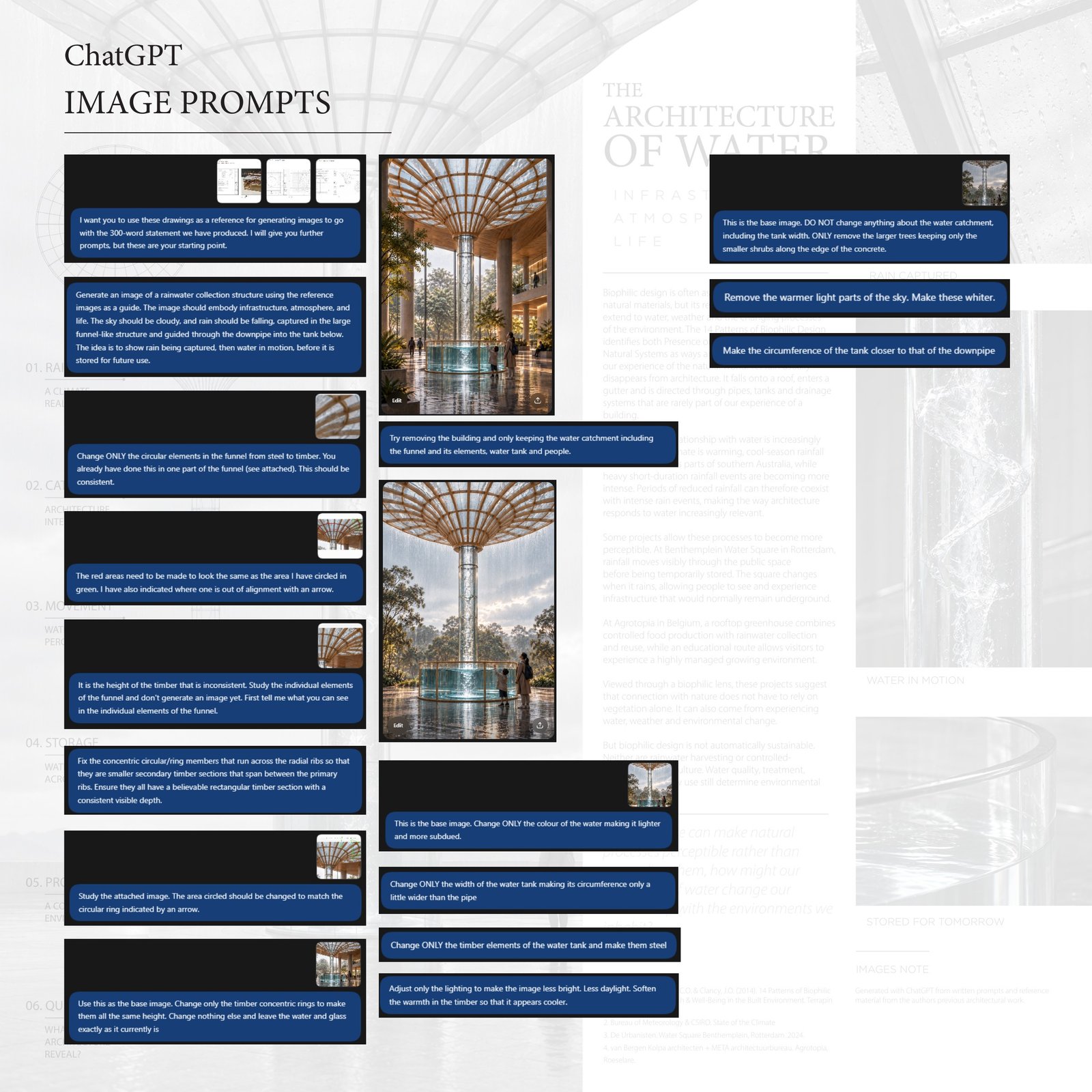
Where the project began: a short research board on rain and architecture, asking what changes when water is made perceptible rather than hidden. The rain funnel in these image studies was later set aside, but the question carried through to the canopy.
Read the Text
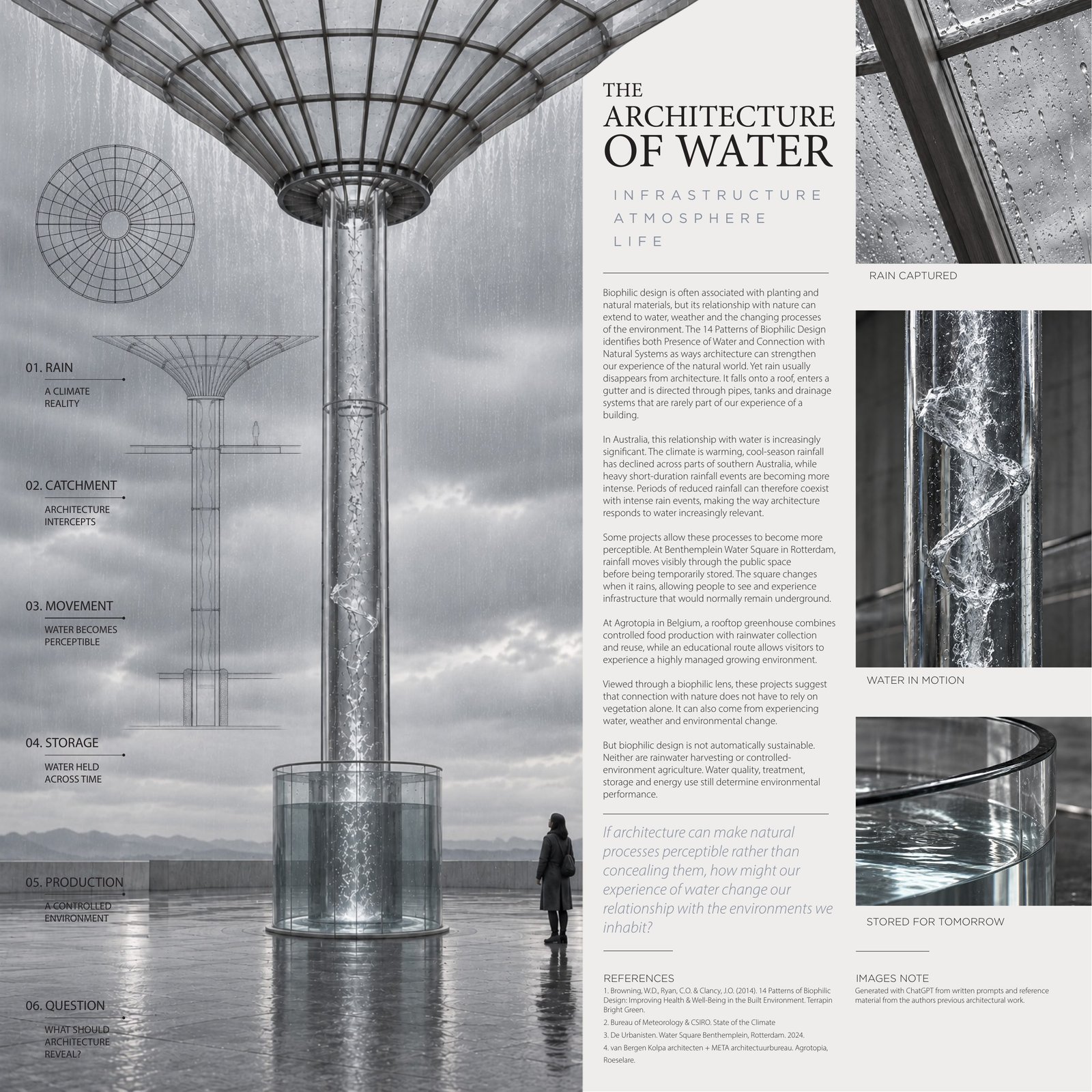
Biophilic design is often associated with planting and natural materials, but its relationship with nature can extend to water, weather and the changing processes of the environment. The 14 Patterns of Biophilic Design identifies both Presence of Water and Connection with Natural Systems as ways architecture can strengthen our experience of the natural world. Yet rain usually disappears from architecture. It falls onto a roof, enters a gutter and is directed through pipes, tanks and drainage systems that are rarely part of our experience of a building.
In Australia, this relationship with water is increasingly significant. The climate is warming, cool-season rainfall has declined across parts of southern Australia, while heavy short-duration rainfall events are becoming more intense. Periods of reduced rainfall can therefore coexist with intense rain events, making the way architecture responds to water increasingly relevant.
Some projects allow these processes to become more perceptible. At Benthemplein Water Square in Rotterdam, rainfall moves visibly through the public space before being temporarily stored. The square changes when it rains, allowing people to see and experience infrastructure that would normally remain underground.
At Agrotopia in Belgium, a rooftop greenhouse combines controlled food production with rainwater collection and reuse, while an educational route allows visitors to experience a highly managed growing environment.
Viewed through a biophilic lens, these projects suggest that connection with nature does not have to rely on vegetation alone. It can also come from experiencing water, weather and environmental change.
But biophilic design is not automatically sustainable. Neither are rainwater harvesting or controlled-environment agriculture. Water quality, treatment, storage and energy use still determine environmental performance.
If architecture can make natural processes perceptible rather than concealing them, how might our experience of water change our relationship with the environments we inhabit?
REFERENCES
- Browning, W.D., Ryan, C.O. & Clancy, J.O. (2014). 14 Patterns of Biophilic Design: Improving Health & Well-Being in the Built Environment. Terrapin Bright Green.
- Bureau of Meteorology & CSIRO. State of the Climate
- De Urbanisten. Water Square Benthemplein, Rotterdam. 2024.
- van Bergen Kolpa architecten + META architectuurbureau. Agrotopia, Roeselare.
IMAGES NOTE
Generated with ChatGPT from written prompts and reference material from my previous architectural work.
Behind the Board
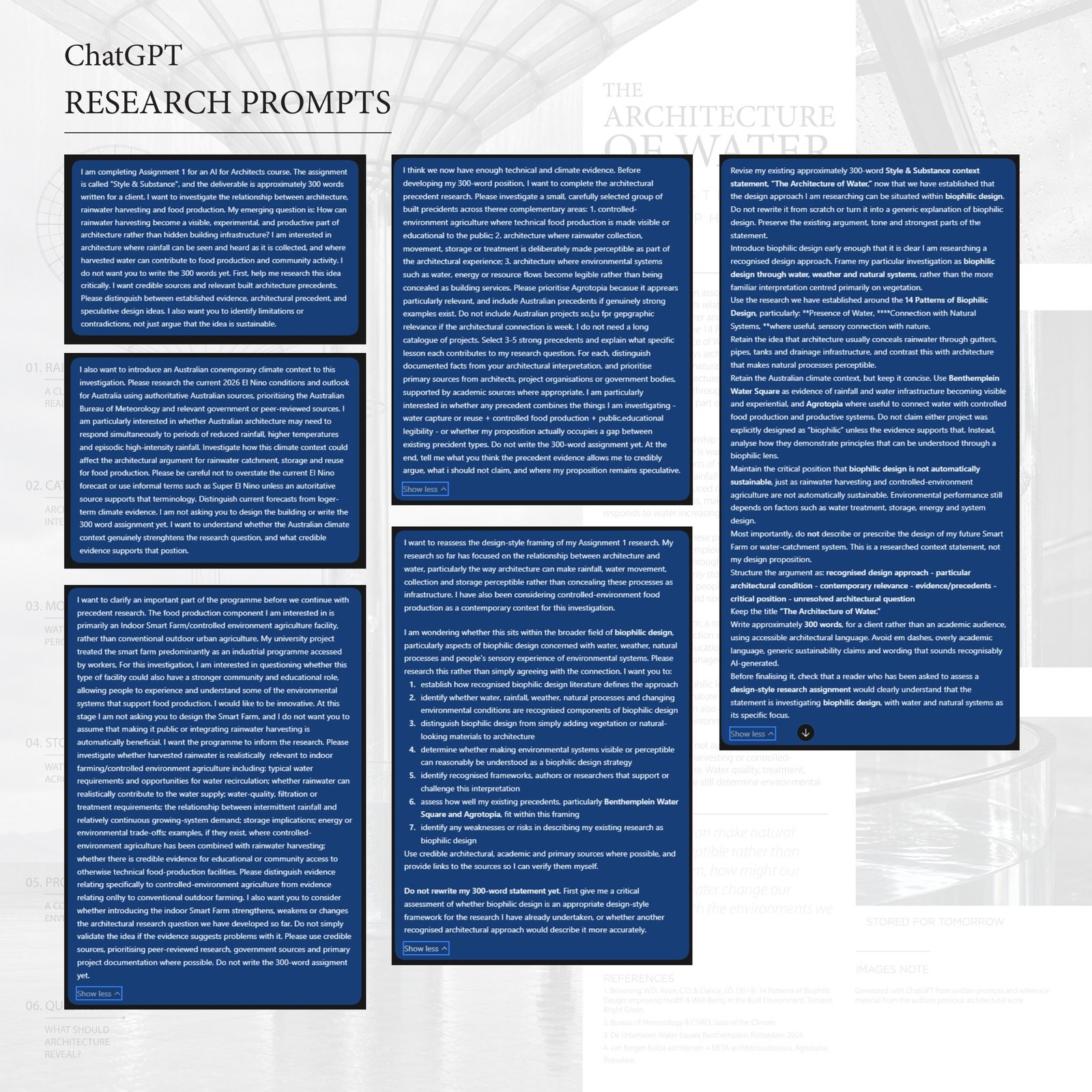
The ChatGPT research prompts and image prompts behind the board, as submitted.